Tiny houses aren’t just a real-world trend — they’ve become one of the most satisfying ways to build and play in The Sims 4. With the introduction of The Sims 4: Eco Lifestyle and The Sims 4: Tiny Living Stuff, players gained powerful tools to design compact homes that are environmentally friendly, budget-efficient, and surprisingly luxurious.
If you’ve ever struggled with oversized mansions that feel empty or expensive households drowning in bills, tiny eco homes might be your perfect solution. In this guide, we’ll explore how to design small but sustainable homes that maximize both style and gameplay benefits.
Why Tiny Eco Homes Are So Powerful in Gameplay
Tiny eco homes aren’t just about aesthetics — they actually improve how your Sims live.
1. Lower Household Bills
Eco upgrades such as solar panels, wind turbines, dew collectors, and eco appliances drastically reduce utility costs. Pair that with the bill reductions from a tiny home classification, and your Sim can live comfortably while spending very little.
2. Tiny Living Skill Boosts
Homes built within the Tiny Living tile limits (especially under 100 tiles) unlock powerful perks:
- Faster skill gain
- Stronger relationship growth
- Increased comfort and fun gains
- Reduced bills
This makes tiny homes incredibly efficient for legacy challenges, rags-to-riches gameplay, and single-Sim households.
3. Sustainable Storytelling
Eco builds naturally support storytelling. Whether your Sim is an environmental activist, an off-grid artist, or a minimalist couple escaping city life, tiny eco homes create immersive narratives.
Choosing the Right Lot for a Tiny Eco Build
While you can build tiny eco homes in almost any world, some environments make them shine.
- Eco-focused neighborhoods
- Forested lots
- Coastal communities
- Rural farmland settings
- Desert modern landscapes
Small lots like 20×15 or 20×20 are ideal. The smaller the lot, the more intentional your design choices become.
Understanding Tiny Living Tile Limits
To qualify as a tiny home in The Sims 4: Tiny Living Stuff, your build must stay within specific tile counts:
- Micro Home (32 tiles)
- Tiny Home (64 tiles)
- Small Home (100 tiles)
Each tier gives different bonuses, but Micro Homes offer the strongest skill and relationship boosts.
When building eco tiny homes, aim for 32–64 tiles to maximize benefits while keeping enough space for comfort.
Designing a Functional Layout
In tiny homes, layout matters more than decoration.
Open Concept Is Essential
Avoid hallways. Instead:
- Combine kitchen and living areas
- Use rugs to define spaces
- Separate rooms with half-walls or shelves
Use Vertical Space
Vertical design is your secret weapon:
- Loft beds
- Raised platforms
- Wall-mounted storage
- Tall cabinets
High ceilings make even a 32-tile home feel airy.
Eco-Friendly Exterior Design
The outside of your tiny eco home should reflect sustainability.
Roof Design
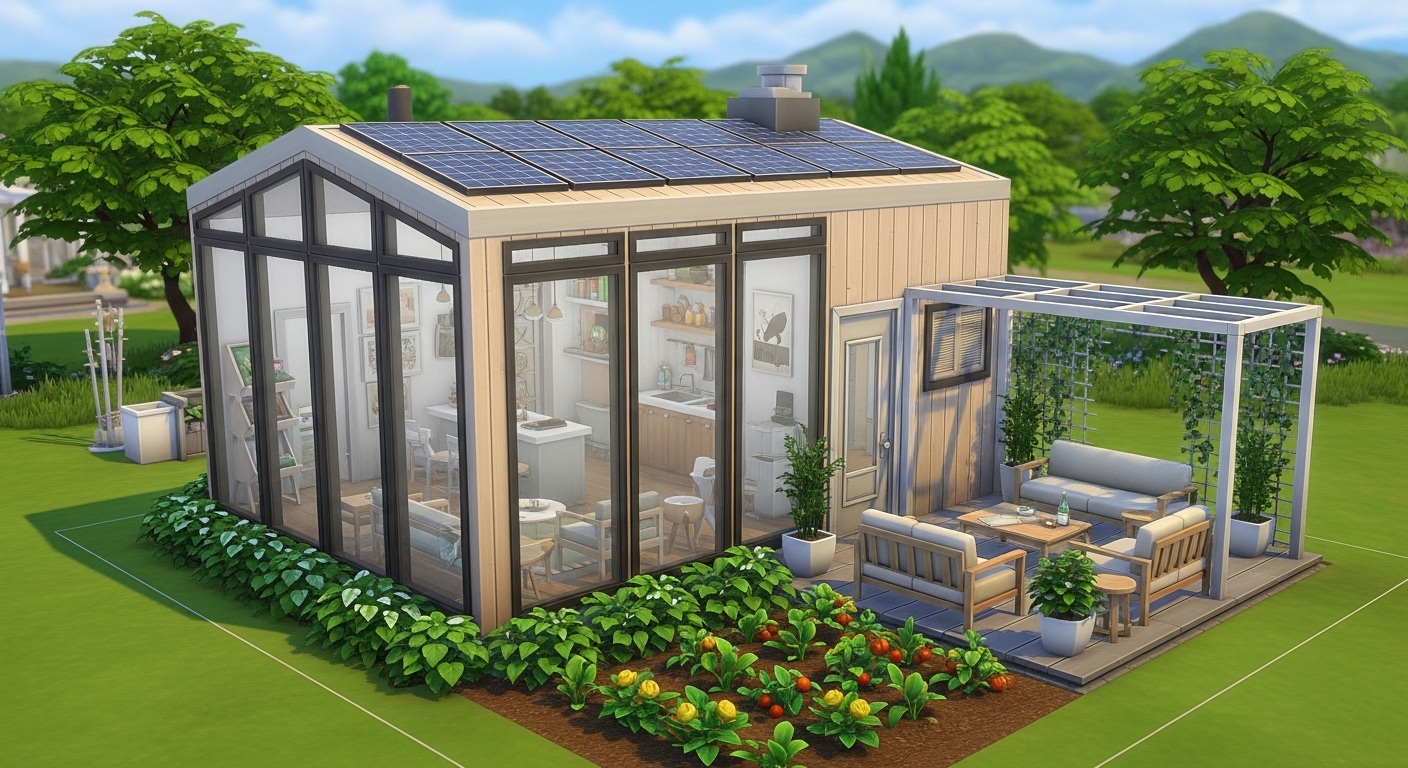
- Flat roofs for solar panels
- Slanted modern roofs
- Green roof textures if available
Exterior Materials
Stick to:
- Light wood siding
- Neutral panels
- Recycled metal finishes
- Earth-tone brick
Avoid overly ornate trims that make the house feel heavy.
Landscaping for Sustainability
Landscaping plays a huge role in eco builds.
Include:
- Small vegetable garden
- Native plants
- Compost bins
- Recycled décor
- Outdoor seating
Keep landscaping simple and practical. Tiny eco homes should look intentional, not cluttered.
Must-Have Eco Objects
To fully embrace sustainability from The Sims 4: Eco Lifestyle, include:
- Solar panels
- Wind turbines
- Dew collectors
- Eco refrigerator
- Eco dishwasher
- Fabricator
- Recycling machine
If you want a challenge, activate the Off-the-Grid lot trait. It transforms gameplay completely.
Interior Style Ideas for Tiny Eco Homes
Eco builds don’t have to look identical. Here are several design directions you can try:
🌿 Scandinavian Minimalism
Light wood, white walls, and soft green accents.
🌻 Cottagecore Eco
Floral touches, wooden beams, and cozy textures.
🏙 Industrial Reclaimed
Exposed brick, metal shelving, and upcycled décor.
🧡 Earth-Tone Rustic
Warm terracotta, beige walls, and handmade furniture.
Changing style keeps your builds fresh while staying sustainable.
Making Small Spaces Feel Bigger
Tiny doesn’t have to mean cramped.
Use Large Windows
Natural light visually expands rooms and complements eco themes.
Keep Flooring Consistent
One flooring material across the main space creates visual flow.
Limit Wall Colors
Stick to two or three tones maximum.
Choose Slim Furniture
Bulky sofas can overwhelm a 32-tile home. Opt for compact pieces.
Multi-Functional Furniture Is Essential
Tiny eco homes thrive on efficiency.
Great options include:
- Murphy beds
- Fold-down desks
- Storage benches
- Compact dining tables
- Ladder stairs instead of traditional stairs
Every item must serve a purpose.
Tiny Eco Homes for Different Sims
🌱 The Solo Activist
A 32-tile micro home with:
- Kitchenette
- Compact bathroom
- Loft bed
- Fabrication corner
Perfect for skill-focused gameplay.
💚 The Eco Couple
A 64-tile tiny home featuring:
- Open kitchen/living combo
- Shared bedroom
- Small patio garden
Thanks to Tiny Living bonuses, relationship growth is faster.
🎨 The Creative Maker
Use the fabrication system from The Sims 4: Eco Lifestyle to create furniture from recycled materials. It adds realism and progression.
Budget-Friendly Build Strategy
Tiny eco homes are perfect for low-budget challenges.
Start with:
- Basic plumbing
- Cheap counters
- One solar panel
- Starter fridge
Upgrade slowly rather than expanding the footprint. This keeps your house sustainable and efficient.
Combining Tiny Living and Eco Lifestyle
The synergy between:
- The Sims 4: Tiny Living Stuff
- The Sims 4: Eco Lifestyle
creates one of the strongest gameplay combinations available.
You get:
- Skill boosts
- Reduced bills
- Sustainable utilities
- Crafting systems
- Environmental impact mechanics
Few other pack combinations offer this level of depth.
Advanced Build Ideas
If you want to elevate your design:
Split-Level Micro Layout
Use platforms to subtly separate living and sleeping areas.
Indoor-Outdoor Flow
Add:
- Glass sliding doors
- Small deck
- Outdoor dining table
- Container garden
Outdoor space makes tiny homes feel twice as large.
Common Mistakes to Avoid
❌ Overcrowding décor
❌ Ignoring natural light
❌ Building unnecessary hallways
❌ Using dark heavy wallpapers
❌ Forgetting roof details
Remember: simplicity is the goal.
Storytelling Ideas
Tiny eco homes are perfect for narrative gameplay:
- A Sim reducing their carbon footprint
- A couple downsizing to save money
- A freelancer living minimally
- A retiree moving off-grid
- A young Sim starting with nothing
The small footprint encourages focused storytelling.
Why Tiny Eco Homes Are Trending
Modern players prefer builds that are:
- Realistic
- Affordable
- Gameplay-efficient
- Visually calming
- Sustainable
Huge mansions look impressive, but tiny eco homes feel personal and meaningful.
They’re easier to furnish, easier to maintain, and often more enjoyable to play in long term.
Final Thoughts
Tiny eco homes in The Sims 4 prove that small spaces can deliver massive gameplay benefits. By combining the tile-based bonuses from The Sims 4: Tiny Living Stuff with the sustainability systems from The Sims 4: Eco Lifestyle, you create homes that are stylish, efficient, and deeply rewarding to play.
Whether you prefer Scandinavian minimalism, cozy cottagecore, or modern eco-industrial style, tiny homes challenge you to design smarter and live greener.
In the end, “small but sustainable” isn’t just a theme — it’s one of the most satisfying ways to build in The Sims 4.