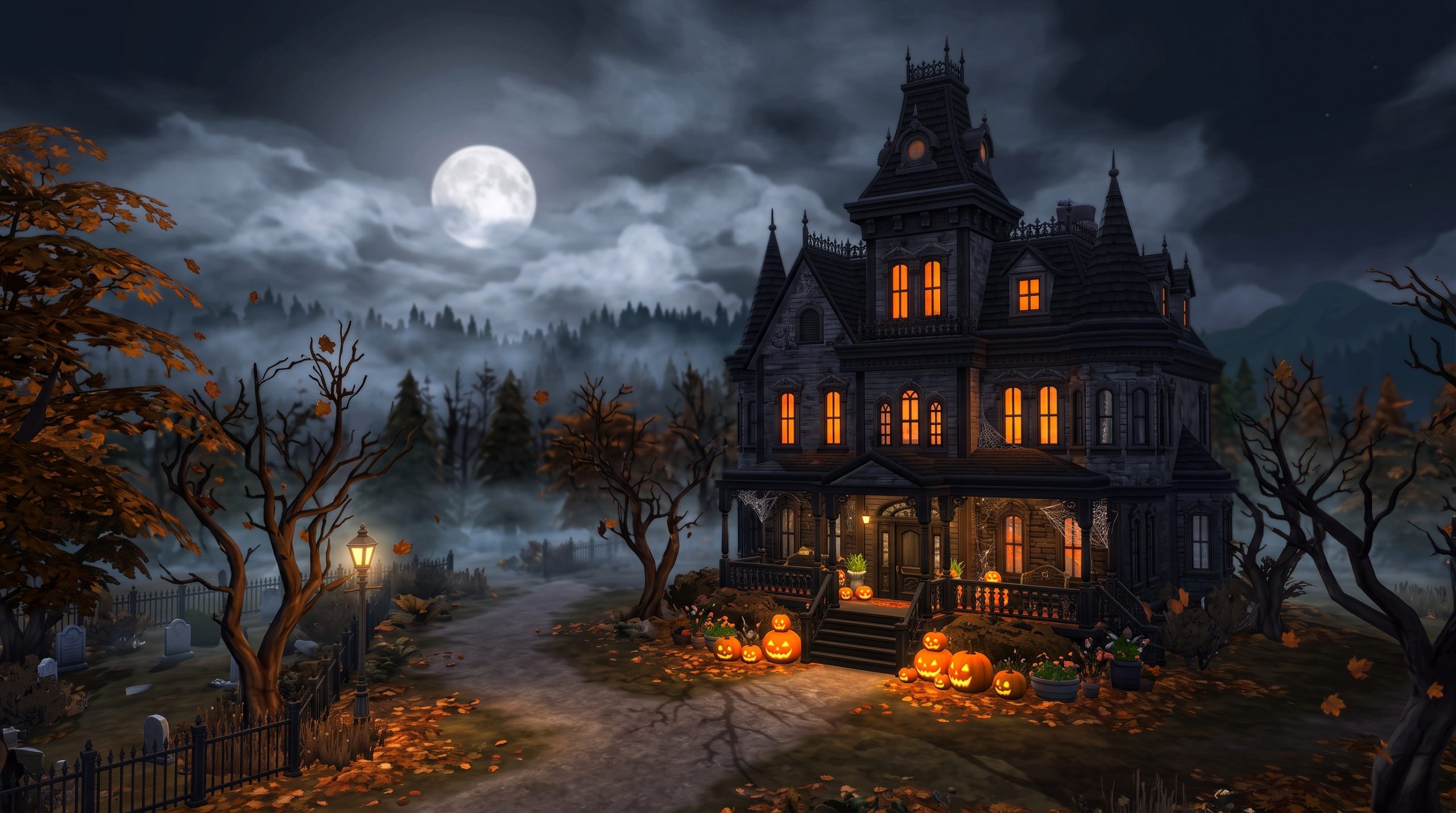
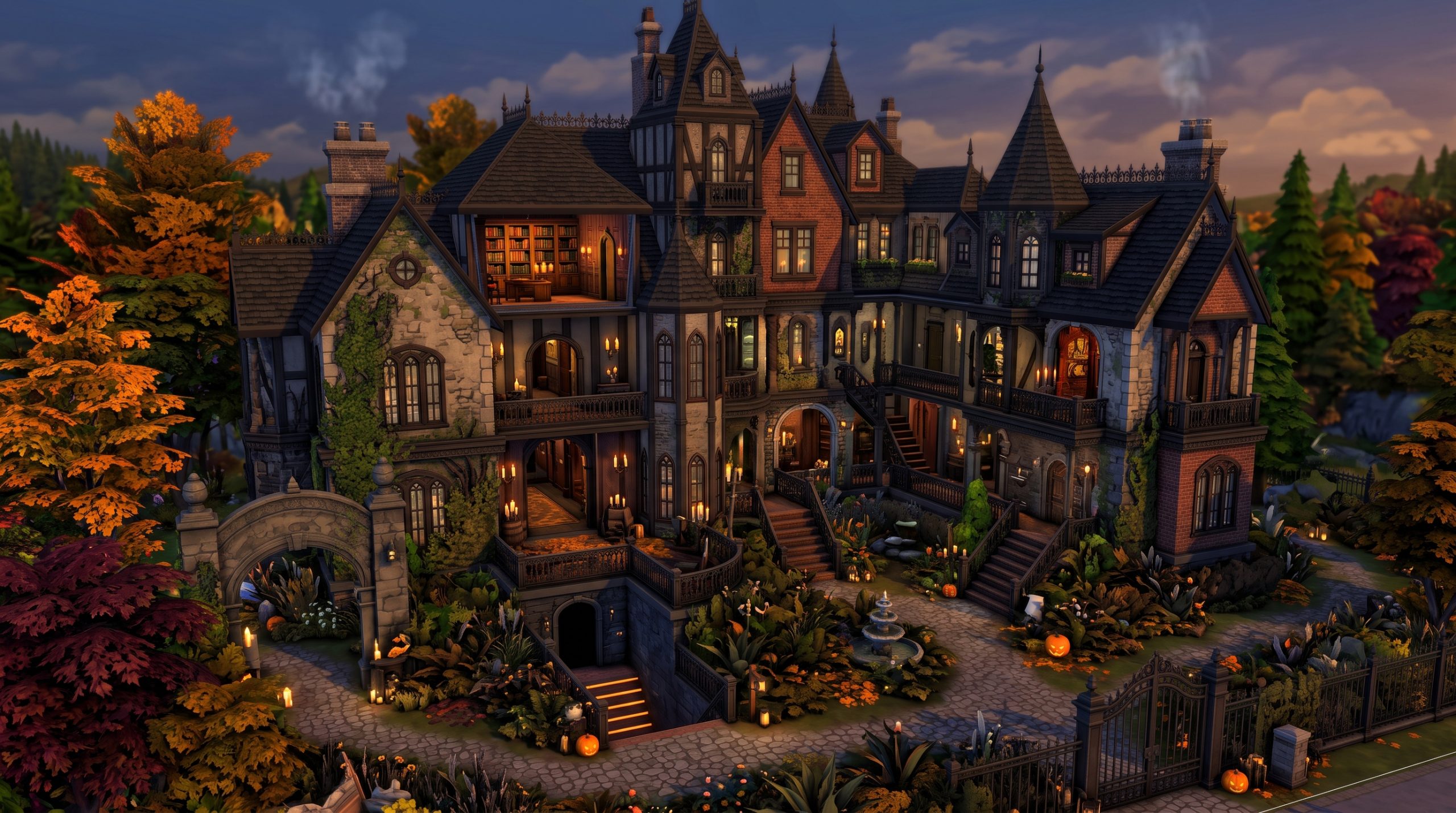
What if your Sims 4 mansion looked completely normal from the outside, but inside it was hiding a maze of secret rooms, mysterious corridors, false doors, hidden staircases, and rooms that seem to have no reason to exist?
That is the idea behind the The Sims 4 Labyrinth House Challenge.
Instead of building another beautiful mansion where every bedroom, bathroom, and hallway is easy to find, this challenge asks you to create a house that feels almost impossible to understand. Your Sims should be able to walk through a perfectly normal library and suddenly discover a hidden passage. A small closet could lead to an underground corridor, while a staircase could take them somewhere completely unexpected.
The finished house can become a spooky Halloween mansion, a gothic estate, a mysterious family home, a secret spellcaster residence, or even an escape-room-style build where another player has to discover the final room.
Can You Find the Hidden Room?
The floor plan above shows the labyrinth mansion, but one room is deliberately hidden.
Can you figure out where it is?
Don’t worry if you can’t — the complete multi-level floor plan is available in our Telegram channel. You’ll get the full mansion layout, secret passage location, hidden room reveal, and the complete build map so you can recreate the challenge in The Sims 4.
🔐 Get the Complete Labyrinth Floor Plan in Telegram
Try to solve the puzzle before opening the full map!
And the best part is that you do not need to make the entire house frightening. A beautiful, elegant mansion with a few carefully hidden secrets can be much more mysterious than a house covered in obvious Halloween decorations.
What Is the Sims 4 Labyrinth House Challenge?
The Sims 4 Labyrinth House Challenge is a building challenge where the goal is to create a mansion with a confusing floor plan and multiple hidden areas.
The outside of the house should look believable. It could be a Victorian mansion, gothic manor, luxury estate, old countryside home, or mysterious modern residence.
Inside, however, the layout becomes much more complicated.
The basic challenge is to include at least 10 main rooms, 5 hidden areas, 3 secret passages, 2 dead ends, 1 secret staircase, 1 basement labyrinth, and one final secret room.
You can make the challenge much harder by adding false doors, duplicate-looking corridors, hidden entrances, unexpected staircases, and rooms that connect parts of the mansion that appear completely unrelated.
The concept is not entirely new to the Sims community. An EA Forums Mystery Mansion Challenge, inspired by the Winchester Mystery House, specifically encouraged builders to create an extremely elaborate mansion with hidden passageways, dead ends, unusual stairs, a basement, an attic, and a tower.
Your version can be smaller and easier to play, or you can build an enormous mansion where getting lost is part of the fun.
Start With a Normal-Looking Mansion
The biggest trick is to make the exterior look ordinary.
Do not build an obviously strange house from the beginning. A symmetrical façade can make the final reveal much more effective.
Imagine a large central entrance with two wings, tall windows, a formal staircase, a garden, and an elegant roof.
From the street, it should look like a completely normal luxury home.
Inside, start with realistic spaces such as a living room, kitchen, dining room, library, office, bedrooms, and bathrooms.
Once the normal floor plan is established, start adding the hidden architecture.
This contrast between the exterior and interior is what makes the labyrinth concept work.
A player should initially think they understand the house.
Then they discover the first secret door.
Build a Confusing Entrance Hall
The entrance hall should be the first opportunity to confuse the player.
Instead of creating one obvious hallway leading directly to the living room, give the entrance several possible directions.
One door can lead to the dining room.
Another can lead to the library.
A staircase can lead upstairs.
A narrow corridor can appear to lead to a guest room.
But one of these routes should contain a secret.
Use paintings, statues, mirrors, plants, cabinets, bookshelves, and other decorations to make the space visually interesting.
You want players to concentrate on the decoration rather than immediately noticing where the hidden passage begins.
A large entrance hall can also contain a staircase that looks important but does not actually lead to the main part of the second floor.
That becomes your first false clue.
Create Your First Secret Passage
Your first secret passage should be discoverable without being completely obvious.
A library is one of the best places for this.
Create a wall of bookshelves and hide an entrance among them. The passage could lead to a small private study, secret bedroom, hidden staircase, or narrow hallway.
The important thing is that the passage should connect two areas that normally would not appear connected.
For example, your library could secretly connect to the kitchen.
A guest bedroom could secretly connect to the basement.
A bathroom could contain a tiny door leading into a long corridor.
This creates the feeling that there is another floor plan hidden behind the visible one.
The Sims 4 community has long used bookshelf-style entrances and hidden doors for this purpose, and current Build/Buy custom-content options also include functional hidden sliding bookcase doors.
If you want the challenge to be base-game friendly, make sure your build does not depend on custom content.
Add False Doors and Dead Ends
A good labyrinth needs dead ends.
Not every corridor should reward the player.
Create at least two or three hallways that simply stop.
One can end at a blank wall.
Another can lead to a tiny storage room.
A third can contain a decorative door that does not lead anywhere useful.
You can make these areas look suspicious by adding one unusual object.
For example, put an antique portrait at the end of a corridor.
Place a large mirror in an otherwise empty room.
Add a locked-looking door beside a staircase.
These details encourage the player to wonder whether there is a secret they have not discovered.
That uncertainty is one of the most important parts of the challenge.
Build a Room Behind a Room
One of the easiest ways to create a secret mansion is to hide a smaller room behind a normal one.
Build a beautiful bedroom with a large wardrobe or bookshelf.
Behind the wall, create a small hidden office.
The player sees the bedroom but has no idea that another room exists directly behind it.
You can repeat this trick throughout the mansion.
A dining room could hide a wine cellar.
A study could hide an archive.
A bathroom could hide a narrow passage.
A nursery could hide a forgotten bedroom.
A kitchen pantry could hide a staircase.
Try not to make all of the secret rooms the same size.
Some should be tiny.
Others should be surprisingly large.
Make the Basement Part of the Maze
Do not treat the basement as a normal utility level.
Make it one of the most mysterious areas of the mansion.
Start with an ordinary basement containing storage shelves, laundry equipment, boxes, old furniture, and other believable objects.
Then hide another entrance.
A narrow corridor can lead behind the normal basement rooms.
From there, create a second underground section.
This could contain a secret laboratory, treasure room, old library, occult room, underground garden, hidden bedroom, crypt, or forgotten family archive.
For a Halloween build, the basement can become the point where the mansion changes completely.
The upper floors can be elegant and luxurious.
The basement can reveal the history of the house.
Create a Secret Staircase
A secret staircase can make the floor plan feel much larger than it actually is.
Instead of placing all staircases in obvious central locations, hide one behind a wall, inside a private room, or at the end of a narrow corridor.
The staircase could connect the second floor directly to the basement.
Or it could lead from the basement to a small attic room.
An even better trick is to make the staircase appear to lead somewhere unimportant.
For example, a small staircase behind a storage area might lead to an unexpected room on the second floor.
The player suddenly realizes that the house has vertical connections that were never visible from the main rooms.
Build an Attic Nobody Expects
The attic should not simply be a row of storage boxes.
Give it a purpose.
It could contain an old bedroom that has been untouched for decades.
It could be a private artist’s studio.
It could be an observatory.
It could contain family portraits and old furniture.
Or it could be the entrance to another secret passage.
A particularly fun idea is to make the attic appear completely inaccessible from the main staircase.
Instead, Sims reach it through a tiny hidden staircase somewhere else in the house.
Now the player has to discover not only the attic, but also how to reach it.
Add a Secret Room Behind the Library
The library can become the central mystery of the mansion.
Create a large room filled with bookshelves, comfortable chairs, paintings, and a fireplace.
Then hide one entrance among the shelves.
Behind it, create a narrow corridor.
At the end of that corridor, add another door.
That door can lead to a completely unexpected space.
Perhaps it is a private office.
Perhaps it is a treasure room.
Perhaps it is a magical laboratory.
Or perhaps it leads back into another part of the house.
This last option is particularly effective because the player may spend time trying to find the final secret, only to discover that the corridor simply brought them back to somewhere they had already visited.
Create One Completely Unexpected Room
Not every secret room needs to be dark or creepy.
In fact, one unexpected room can make the entire build much more memorable.
Imagine exploring a gothic mansion filled with dark wood, stone walls, old portraits, and candlelight.
Then you open a hidden door and find a bright tropical greenhouse.
Or a luxury cinema.
Or a colorful gaming room.
Or a beautiful indoor pool.
Or a cozy café.
The sudden change makes the discovery feel like a reward.
For a Halloween version, this could even be a beautiful enchanted garden hidden underneath the mansion.
The player expects something frightening and instead discovers something magical.
Use Clues Instead of Making Everything Random
Your labyrinth should be confusing, but it should not be impossible.
Give players small clues.
A particular painting can appear near important entrances.
A certain statue can face toward a secret door.
A particular color of candle can mark the correct route.
A collection of strange objects can suggest that a hidden room is nearby.
You can even create a story through the objects.
Perhaps the mansion belonged to a secretive family.
Perhaps the previous owner was a spellcaster.
Perhaps a wealthy Sim hid a fortune somewhere inside the house.
Perhaps the entire labyrinth was designed to protect one particular room.
The decorations should tell the player that there is a reason for the strange architecture.
The Three-Level Labyrinth
For a larger build, use three levels.
The first floor should contain the normal mansion.
The second floor should introduce the strange architecture.
The basement should contain the deepest secrets.
You can connect them in unexpected ways.
For example:
First floor: Entrance → Library → Secret Passage → Study
Second floor: Bedroom → Hidden Staircase → Attic
Basement: Storage Room → Secret Corridor → Laboratory → Hidden Staircase → Library
Now the player realizes that the library is actually one of the central points of the entire mansion.
This creates a much stronger feeling of discovery than simply adding random secret rooms.
The Sims 4 Labyrinth House Challenge Rules
If you want to make this a playable challenge rather than simply a build idea, use a set of rules.
Your mansion should contain at least:
- 10 main rooms
- 5 secret areas
- 3 hidden passages
- 2 dead ends
- 1 secret staircase
- 1 accessible attic
- 1 basement
- 1 unexpected room
- 1 final secret room
- 1 hidden reward
For a harder version, add five more dead ends and at least three false doors.
You can also challenge another player to explore the mansion without seeing the floor plan.
Start their Sim at the front door.
Do not explain where the hidden rooms are.
Their goal is to find the final secret room.
Create a Scoring System
To make the challenge more competitive, give the player points for discoveries.
Finding a hidden room can be worth one point.
Finding a secret passage can be worth two points.
Finding the secret staircase can be worth three points.
Discovering the underground area can be worth three points.
Finding the final room can be worth five points.
You can also subtract points for entering a dead end.
This turns the build into a small exploration game inside The Sims 4.
Turn the Build Into a Halloween Labyrinth
September and October are perfect for turning this idea into a spooky Sims 4 build.
Use dark wood, old stone, dramatic lighting, candles, overgrown landscaping, mysterious portraits, and hidden underground rooms.
But do not decorate every room with Halloween objects.
A more subtle approach can be much more atmospheric.
Make the first rooms elegant.
Then introduce strange details.
A portrait that looks slightly out of place.
A corridor that is too narrow.
An abandoned nursery.
A hidden staircase.
An underground room.
Finally, the player discovers the real secret of the mansion.
This gradual change from beautiful to mysterious makes the build much more interesting.
Give the Mansion a Story
The best labyrinth houses have a reason for their strange floor plan.
Maybe a wealthy family built secret rooms to protect their fortune.
Maybe an eccentric architect designed the house with no logical layout.
Maybe a spellcaster created hidden laboratories throughout the mansion.
Maybe the house belonged to a mysterious collector.
Maybe the family disappeared and nobody knows what happened.
You do not have to explain the entire story directly.
Let the player discover it through the rooms.
A child’s bedroom can suggest that a family once lived there.
Old portraits can show previous generations.
A hidden office can contain clues.
A locked-looking vault can suggest that something valuable is hidden nearby.
The architecture becomes part of the storytelling.
Build the Final Secret Room
The final room should be the best room in the entire mansion.
This is the reward for completing the labyrinth.
You could create a treasure vault filled with expensive objects.
You could make a magical laboratory.
You could build a secret bedroom belonging to the original owner.
You could create an underground garden.
Or you could make the final room completely unexpected.
For Halloween, an enchanted ritual chamber would fit the theme perfectly.
For a luxury mansion, a private vault or hidden cinema would work beautifully.
Whatever you choose, make sure the player cannot accidentally see it from the main house.
The discovery should feel earned.
Create a Floor Plan and Hidden Map
Once your build is complete, take screenshots of the floor plan.
Create one version without spoilers and another showing every secret passage.
This can make the challenge much easier for other players to use.
You can even create a printable checklist:
Labyrinth House Challenge
☐ Find the first secret passage
☐ Find the hidden staircase
☐ Discover the basement
☐ Find the attic
☐ Escape the first dead end
☐ Discover the hidden library room
☐ Find the unexpected room
☐ Discover the final secret
☐ Collect the hidden reward
This also gives you an opportunity to turn the build into a downloadable challenge for your Sims 4 audience.
The Final Test
When the mansion is finished, choose a Sim who has never seen the floor plan.
Start at the main entrance.
Do not explain where the secret rooms are.
Let them explore.
If they immediately find the final room, make the challenge harder.
If they become completely stuck, add another clue.
The perfect labyrinth should make players confused enough to feel challenged but curious enough to keep exploring.
Every hallway should create another question.
Every hidden door should make them wonder whether another secret exists.
And the final room should make the entire journey feel worthwhile.
Final Thoughts
The Sims 4 Labyrinth House Challenge is a different way to think about building.
Instead of asking only whether a house looks beautiful, you are designing an experience.
The exterior creates the first impression.
The normal rooms make the mansion believable.
The secret passages create curiosity.
The dead ends create confusion.
The hidden rooms create discovery.
And the final secret room gives the player a reason to explore every corner.
You can build a small mysterious cottage, a huge gothic mansion, a Halloween haunted estate, or an enormous luxury house with an impossible floor plan.
The important rule is simple: make the house look normal enough that nobody expects what is hiding inside.
Then hide the labyrinth behind the walls.