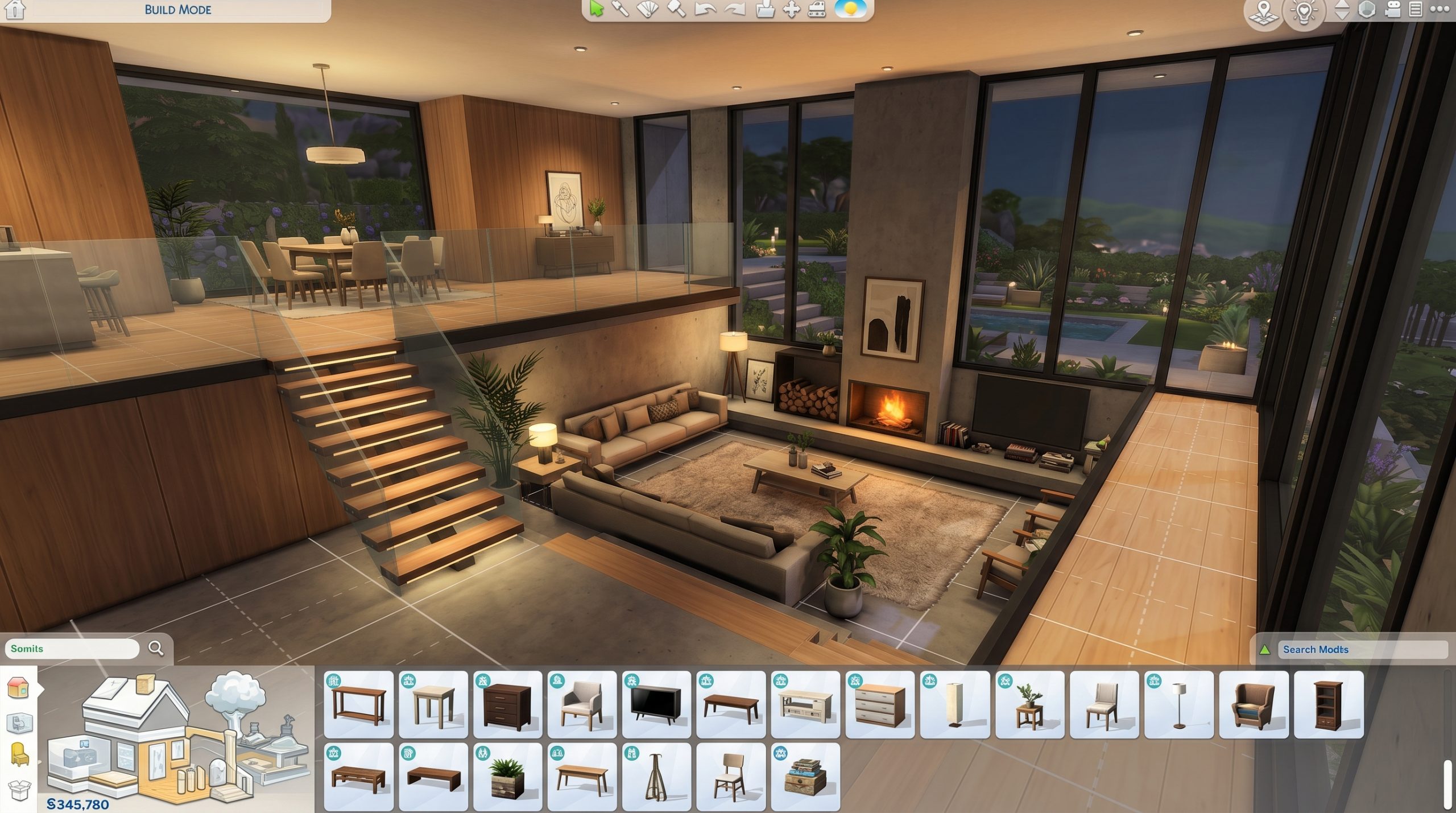
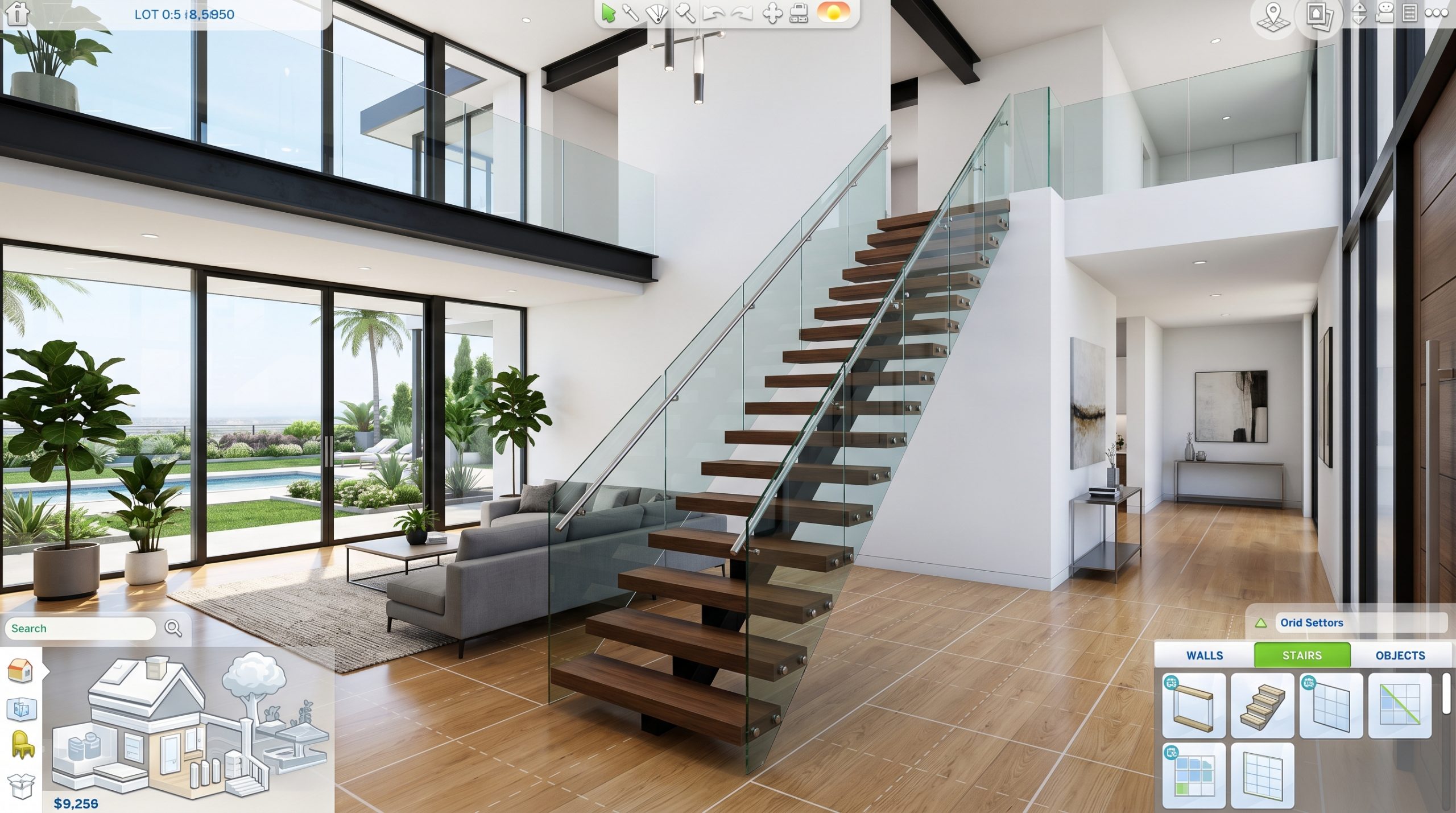
Floating stairs are one of the most popular modern building techniques in because they instantly make any house look expensive, architectural, and visually advanced. Unlike traditional staircases that feel heavy and grounded, floating stairs create the illusion that steps are suspended in mid-air, giving builds a clean and futuristic aesthetic that fits perfectly with modern, minimalist, and luxury homes.
With the latest updates to platforms, railings, and build mode tools, creating floating staircases is now much easier than it used to be. Players can design realistic architectural interiors without relying on complex cheats or mod-heavy solutions. This makes floating stairs not only a creative feature but also an essential skill for anyone who wants to improve their building style.
If you are still learning how stair systems and platforms work in general, it is highly recommended to read our complete breakdown of the latest mechanics here: sims4haki.com
Floating stairs also connect directly with split-level architecture, which we covered in detail in this guide: sims4haki.com
Together, these three concepts—stairs, platforms, and floating structures—form the foundation of modern building design inside the game.
What Are Floating Stairs in The Sims 4?
Floating stairs are staircases that appear to have no visible support structure underneath them. In real-world architecture, they are often attached to hidden beams or walls, but in The Sims 4 they are created using careful placement, platform manipulation, and railing control.
🏡 Continue your Sims 4 building journey!
Our VIP Telegram Bot gives members access to exclusive luxury builds, premium design collections, downloadable resources, advanced building guides, and fresh inspiration every week.
✨ Exclusive luxury builds
📚 Premium PDF guides
🏠 Downloadable house collections
🎨 Interior design inspiration
💎 Members-only content
🚀 New resources added regularly
The result is a staircase that feels lightweight and modern, often used in:
- luxury mansions
- minimalist homes
- industrial lofts
- futuristic builds
- Scandinavian interiors
Unlike traditional stairs, floating stairs are not just functional—they are a design statement. They are often placed in the center of a room or in open-concept spaces where they become a visual focal point.
Why Floating Stairs Are So Popular
Floating stairs have become a signature feature in modern builds because they change how space is perceived. Instead of blocking areas, they enhance openness and flow.
One of the main reasons players use floating stairs is because they make interiors look more expensive and architectural without requiring large budgets or complex building skills. Even simple homes can look high-end when floating stairs are used correctly.
Another important reason is lighting. Floating stairs allow light to pass through more freely, especially when combined with glass railings or open walls. This creates dramatic shadows and depth, making screenshots more visually appealing.
In modern Sims communities, floating stairs are often associated with professional-level builds, especially in showcase homes or Gallery uploads.
How Floating Stairs Connect to Platforms and Split-Level Design
Floating stairs are not an isolated building trick—they are closely connected to platform mechanics and split-level architecture.
When combined with platforms, floating stairs allow players to create smooth transitions between different elevations in a home. Instead of using full floors, you can raise or lower sections of a room and connect them with minimalist staircases.
This is exactly the same principle used in split-level homes, where different areas of the house sit at slightly different heights to create depth and flow.
If you want to understand how these systems work together, you can explore our full guide on split-level houses here:
When used together, floating stairs and platforms create some of the most realistic and modern interiors in the game.
Building Floating Stairs Step by Step
Creating floating stairs is less about a single tool and more about combining several building techniques in a clean and controlled way. The process starts with planning your layout before you even place the stairs.
Most builders begin by deciding where the staircase will act as a focal point. In modern homes, floating stairs are usually placed in open spaces such as living rooms or entrance halls. This allows them to be seen from multiple angles, enhancing their visual impact.
Once the placement is decided, the next step is adjusting the floor height using platforms or foundations. The key idea is to create a slight elevation difference that the stairs will connect naturally. This is where precision becomes important—too much height can make the staircase look unnatural, while too little can make it feel pointless.
After positioning the stairs, the railing system becomes the most important visual element. Removing or simplifying railings is often what gives floating stairs their signature “floating” effect. Glass railings are especially popular because they maintain safety while preserving visual openness.
Lighting also plays a major role. Floating stairs look best when illuminated from multiple directions, especially with soft ambient lighting or ceiling spotlights. This enhances the illusion of weightlessness and adds realism to the structure.
Design Styles That Work Best With Floating Stairs
Floating stairs are extremely versatile, but they work best in specific architectural styles. One of the most common styles is modern minimalism, where clean lines and neutral colors dominate the space. In this style, floating stairs often use white, black, or natural wood textures combined with glass railings.
Another popular style is industrial loft design. In this case, floating stairs are often paired with metal frames, exposed brick walls, and darker color palettes. The contrast between raw materials and the light structure of the stairs creates a strong visual identity.
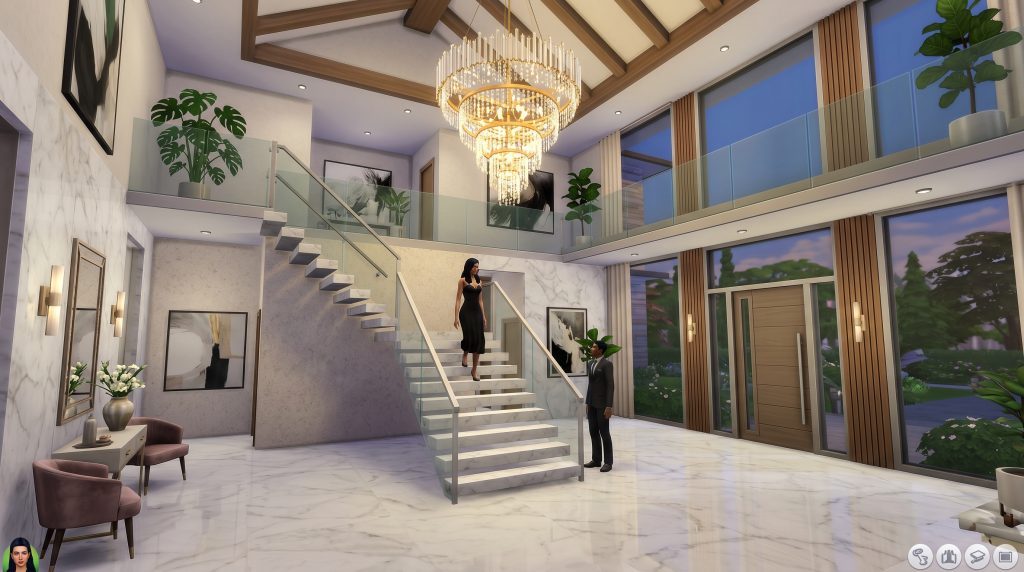
Luxury mansion builds also heavily rely on floating stairs. In these cases, the staircase becomes a centerpiece, often placed in large entrance halls with chandeliers, marble flooring, and double-height ceilings. This type of design emphasizes scale and elegance.
Even Scandinavian builds benefit from floating staircases, especially when combined with natural lighting and soft wood tones. The simplicity of Scandinavian interiors allows the staircase to blend naturally into the environment without overwhelming the space.
Common Mistakes When Building Floating Stairs
One of the most common mistakes players make is overcomplicating the design. Floating stairs are most effective when they are simple and clean. Adding too many decorative elements can ruin the illusion of lightness.
Another frequent issue is poor alignment with platforms. If the height difference is not properly balanced, the stairs may appear disconnected or unnatural. This is why understanding platform mechanics is essential before attempting advanced stair designs.
Many builders also forget about camera angles. Floating stairs should always be tested from multiple perspectives because what looks good from one angle may break visually from another.
Finally, lighting mistakes can completely change the appearance of the staircase. Without proper lighting, floating stairs can look flat or unfinished instead of elegant and modern.
Floating Stairs in Realistic House Design
In real-world architecture, floating stairs are often used in high-end residential homes and modern commercial spaces. This real-world inspiration is why they feel so natural in builds.
They are especially effective in homes that follow open-concept design principles. Instead of dividing spaces with walls, floating stairs act as subtle separators while maintaining visual continuity.
This is also why they pair so well with split-level architecture. When combined, they create homes that feel dynamic, layered, and architecturally authentic.
Performance and Gameplay Considerations
While floating stairs are primarily visual, they also affect gameplay flow. Sims can navigate them like any normal staircase, but placement matters for routing efficiency.
If stairs are placed too close to furniture or walls, Sims may take longer routes or become stuck. This is why open space design is important when using floating staircases.
Proper testing in live mode ensures that both aesthetics and functionality are balanced.
Final Thoughts
Floating stairs are one of the most powerful design tools available in modern building inside . They transform ordinary houses into architectural showcases and add instant visual depth to any build.
When combined with platforms, split-level layouts, and modern interior design principles, floating stairs become part of a larger system of advanced building techniques that define high-quality Sims architecture.
If you have already explored our guides on stair mechanics and split-level houses, floating stairs are the natural next step in improving your building skills. They connect all these systems into one cohesive design approach, allowing you to create homes that feel both realistic and visually impressive.
As you continue building, focus on simplicity, balance, and clean design. Floating stairs work best when they enhance the space rather than dominate it. With practice, they can become one of your signature building techniques.
The official ea.com also features many creative floating staircase builds for inspiration.